3D Filament Dryers: Recommended Models

3D printing has revolutionized the way objects are created; however, to achieve the best results, It is important to use high-quality filaments and make sure they are completely dry to obtain high-quality parts.
In this article, I'll introduce you to the various recommended 3D filament dryers so you can choose the one that best suits your needs.
Why It's Important to Dry 3D Filaments
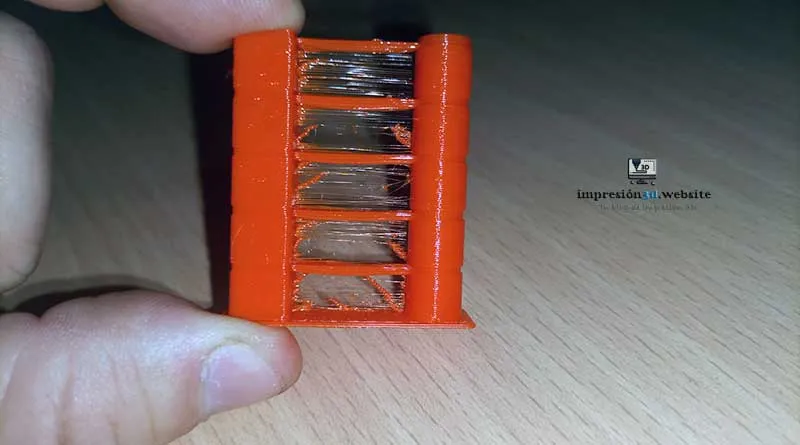
3D printing filaments can absorb moisture from the environment, and if they are printed while containing this moisture, they can cause defects in the part, such as cracks, bubbles, deformations, and poor adhesion between layers… (See more consequences)
If the filaments do not dry properly, it can affect print quality.
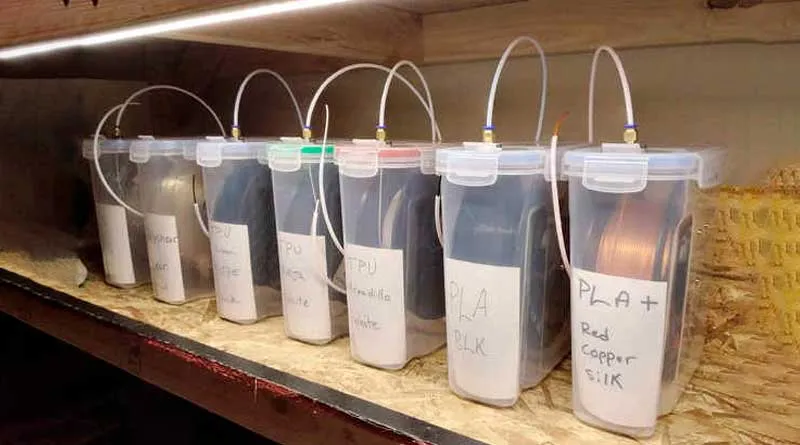
For this reason, It is essential that you store your filaments in a dry place, protected from moisture. Here you can see How to Store 3D Printing Filaments.
And if they've already absorbed moisture, you'll need a 3D filament dryer to remove it and restore them to optimal condition.
Recommended Models of 3D Filament Printers
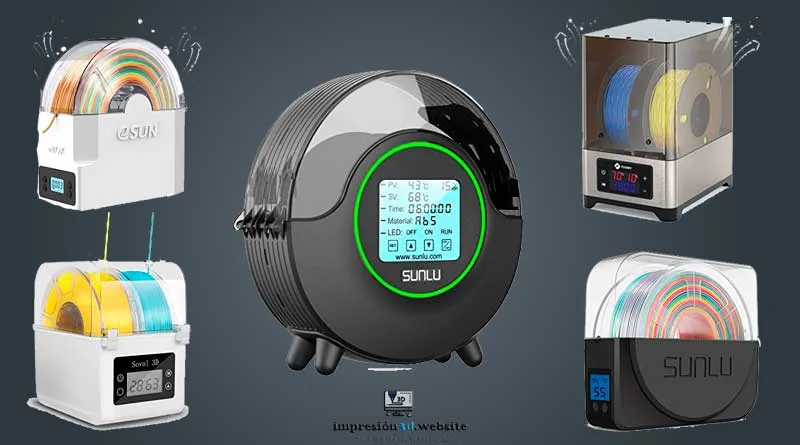
If you're looking for a 3D filament dryer, there are several recommended models available on the market. Here are some recommended 3D filament dryer models:
Sunlu S1
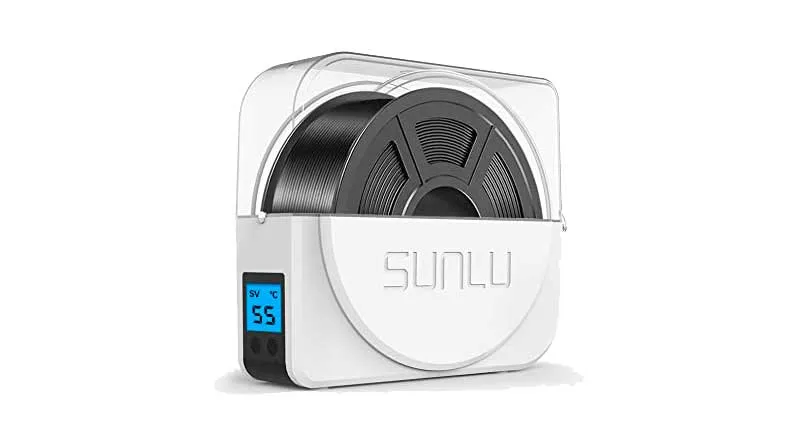
This Sunlu S1 hot air dryer is suitable for drying PLA filaments. It has a capacity of 1 kg, and its temperature is adjustable up to 55 degrees Celsius. It also features an LCD screen and a timer for setting the drying time.
- Maximum capacity: 210 x 85 mm
- Maximum temperature: 55 °C
- Does it have a scale? No
- Screen: 2″
The Sunlu S1 is considered by many to be the best 3D filament dryer because of its value for the price. It is one of the most affordable dryers and offers very good drying quality, especially for PLA.
This model is very easy to use, and you can buy it on Amazon: SUNLU S1 3D Filament Drying Box
Sunlu S2
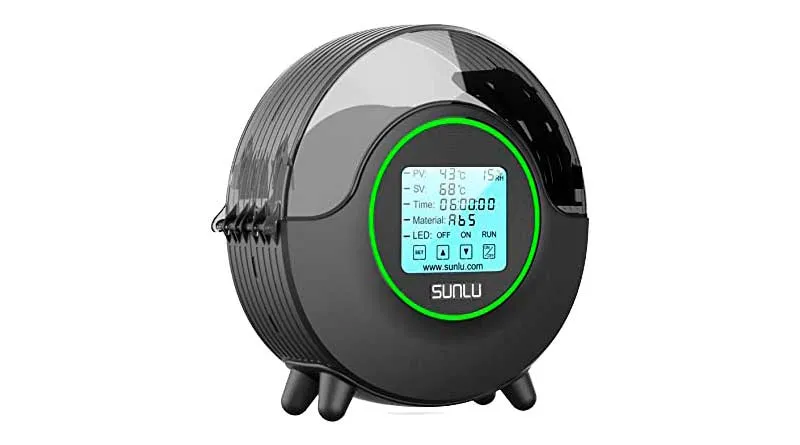
The SUNLU S2 is another hot-air dryer from SUNLU, but with a wider temperature range. It is ideal for printing large pieces, and its temperature is adjustable between 35 and 70 degrees Celsius. It features an LCD screen and a timer for setting the drying time.
- Maximum capacity: 210 x 85 mm
- Maximum temperature: 70 °C
- Does it have a scale? No
- Display: 6.4-inch Touch Screen
The Sunlu S2 reaches a maximum temperature of 70 degrees, making it ideal for drying PETG filament in fewer hours (than the Sunlu S1)
This model is also available on Amazon: SUNLU S2 Filament Dryer
eSUN eBOX
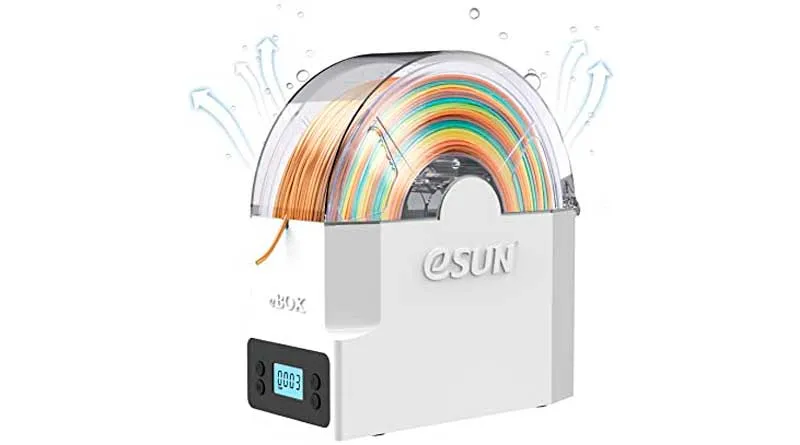
It has a capacity of 1 kg and can dry filaments for up to 18 hours. It features an LCD screen and a timer for setting the drying time.
This model is very easy to use and is available on Amazon: Ebox Lite 3D Filament Drying Box
- Maximum capacity: 200 x 73 mm
- Maximum temperature: 80 °C
- It has a scale: Yes
- Screen: 2″
You can also download the user manual from here.
Sovol SH01
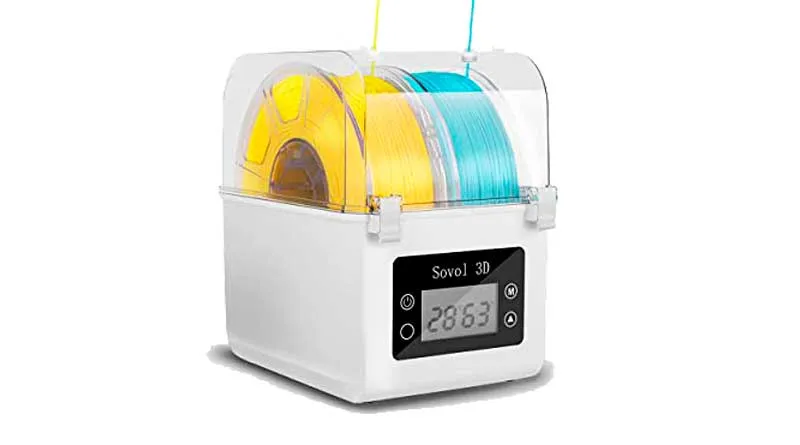
The Sovol SH01 is a hot-air filament dryer with a capacity of up to 1 kg of filament. This model features an LCD screen for adjusting the temperature and drying time, as well as an overheating protection system and a temperature sensor for added safety.
The Sovol SH01 is compatible with most 3D printing filaments, including PLA, ABS, PETG, TPU, and nylon. Its compact and portable design makes it easy to store and transport.
Drying time varies depending on the type of filament and humidity, but on average it takes between 6 and 12 hours. The Sovol SH01 is an excellent choice for those looking for a high-quality filament dryer at an affordable price.
- Maximum capacity: 2 rolls less than 70 mm wide or 1 roll less than 150 mm
- Maximum temperature: 50 °C
- Does it have a scale? No
- Screen: 2″
See prices on Amazon: Sovol 3D Filament Drying Box
FIXDRY Filament Dryer
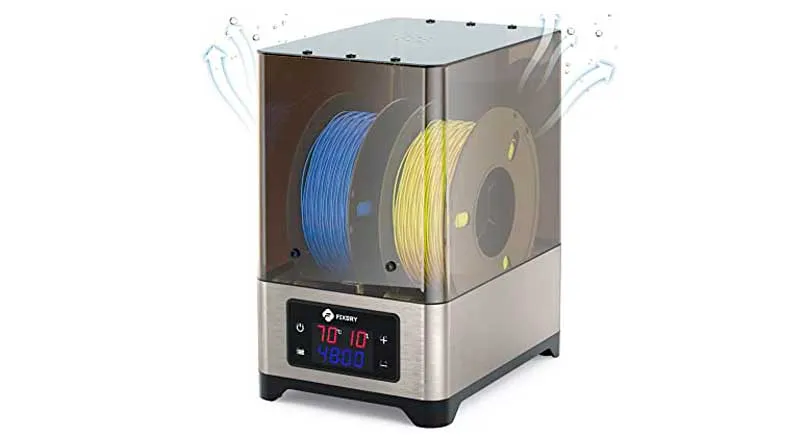
The FIXDRY Filament Dryer is a hot-air dryer with a capacity of 1 kg of filament. Its temperature is adjustable between 35 and 70 degrees Celsius, and it can be set for up to 48 hours to dry the filaments. It features an LED display and a timer to set the drying time. Additionally, it has an overheating protection feature and a fault alert system.
- Maximum capacity: 2 rolls up to 217 x 80 mm
- Maximum temperature: 70 °C
- Does it have a scale? No
- Screen: 2″
This model is also available on Amazon: FIXDRY 3D Filament Dryer
Catalog of the Best-Selling 3D Filament Dryers
These are the best-selling 3D filament dryers. Click on them to learn more about their features or read reviews of users.
Tips for Drying 3D Filaments
No matter what type of 3D filament dryer you choose, there are a few tips you should follow to make sure your filaments are completely dry:
- Store your filaments in a cool, dry place to prevent them from absorbing moisture.
- If your filament is already damp, let it dry for at least 24 hours before using it.
- Before printing, make sure your filament is completely dry. This will help prevent imperfections during printing.
- Use a 3D filament dryer to ensure that your filaments are completely dry before printing.
- Keep in mind that most hair dryers have a fan to circulate air, and this can make some noise.
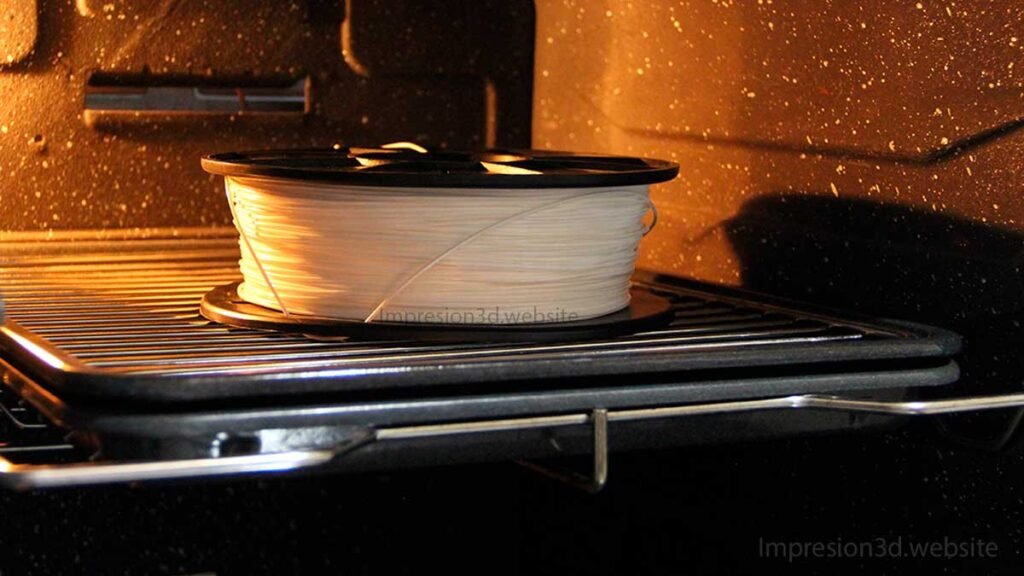
- If you don't have access to a 3D filament dryer, you can use a conventional oven to dry the filaments. However, keep in mind that this may damage your filaments.
Conclusions
3D filament dryers are an essential tool for any 3D printer, as they dry the filament and prevent problems such as nozzle clogging, filament cracking, and poor layer adhesion.
Hot-air, vacuum, and silica gel dryers are the most common options on the market and offer different benefits and features.
It's important to choose the right model for your needs and make sure to store your filaments in vacuum-sealed bags or with silica gel to protect them from moisture.
The choice should be based on the type of filament used. If you only use PLA, your best option is (for its value for money) It will be the Sunlu S1 hair dryer.
If you use other types of filaments, such as ABS, PETG, or even nylon, your best option would be a dryer like the Sunlu S2 or the Esun Ebox since they have a wider temperature range, you'll be able to dry the filaments in fewer hours.
Frequently Asked Questions (FAQs)
- Why is it important to dry 3D filaments?
It is important to dry 3D filaments to prevent problems such as nozzle clogging, filament cracking, and poor layer adhesion. Filaments can absorb moisture from the environment, which affects their quality and physical properties.
- What kind of filament dryer should I choose?
Choose a filament dryer to dry filaments that are already damp, and vacuum-sealed bags with silica gel packets to store them and prevent them from absorbing moisture again.
- Can I use a conventional oven to dry my filaments?
Yes, you can use a conventional oven to dry your filaments, but keep in mind that this may damage some types of filaments.
- How do I know if my filaments are damp?
You can tell if your filaments are damp by checking for bubbles on the surface or listening for a crackling sound while printing.
- How can I store my filaments properly?
It is recommended that you store filaments in a cool, dry place, away from direct sunlight and moisture. You can use vacuum-sealed bags or silica gel to protect your filaments from moisture. (Click here)


According to the article, the temperature of the eSun ebox is 80°, but on the Amazon page it shows 55°.
Hi, Dani!
The 80°C listed in the manual refers to the heating plate at Level 4, which is the setting for drying nylon and PC.
According to the table in the manual, the internal temperature at that level is 50°C. I assume that's the temperature that really matters, and the one listed on Amazon.
Thanks for letting me know.
Best regards, and I wish you every success in your projects!