3D-Printed Organs: The New Frontier in Medicine


3D-printed human organs are changing the way transplants are performed and opening up new possibilities for the treatment of chronic diseases.
Medicine has undergone a true revolution in recent years thanks to 3D bioprinting of organs and tissues.
In this article, we will explore how 3D organ printing works, the benefits and challenges of this technology, and its impact on the future of medicine.
What Are 3D-Printed Organs?
3D-printed organs are replicas of human organs created using a 3D printer that uses biological tissues.
These printers use stem cells or other biological materials to build complex tissue structures, enabling the creation of entire organs for transplantation into patients.
To create the organ, a medical image of the desired organ is used, which is converted into a 3D model that can be printed on a 3D printer.
The end result is an organ identical to the original, which can be used for transplants or for medical research.
YouTube Channel: The Biologist Apprentice
Who Invented the 3D Bioprinter?
3D bioprinting is a relatively new technology that combines 3D printing with biotechnology and tissue engineering.
It does not have a single inventor; rather, its development has been the result of the efforts of various scientists, engineers, and research teams around the world.
One of the major milestones in the development of 3D bioprinting was achieved by scientist Gabor Forgacs and his team at the University of Missouri in 2007.
They pioneered the printing of living tissue using a technology called “bio-ink,” which consists of living cells suspended in a gel-like material.
His work laid the groundwork for the bioprinting of living tissues and organs.
Since then, numerous scientists, researchers, and companies have contributed to the advancement of 3D bioprinting, working on applications ranging from the creation of tissues for transplants to pharmaceutical research and the production of lab-grown meat.
How 3D Organ Printing Works
The process of 3D printing organs is complex and requires cutting-edge technology.
The 3D organ printer works by creating layers of living cells and other biological materials that fuse together to form three-dimensional structures. The printer uses digital information to build the organs, much like a paper printer uses data to print a document.
The 3D model is divided into thin layers and loaded into a specialized 3D printer that uses biocompatible materials to create the organ. The 3D printer uses the information from the 3D model to build the organ layer by layer. Once printed, the organ can be transplanted or used for medical research.
YouTube Channel: The Future Is Exciting…
What Is the Organ Printing Process Like?
The process of printing organs, known as “bioprinting,” is an advanced technique that aims to create functional tissues and organs using special 3D printers and bio-inks composed of living cells and biocompatible materials.
Here are the general steps involved in the organ bioprinting process:
- Data Collection and Design:
- The process begins by collecting data from medical images, such as computed tomography (CT) scans or magnetic resonance imaging (MRI) scans, to obtain an accurate three-dimensional representation of the organ or tissue to be printed.
- The data is used to create a digital 3D model of the organ using computer-aided design (CAD) software.
- Selection of Biomaterials:
- Suitable biomaterials—including hydrogels, polymers, and other biocompatible materials—are selected to form the three-dimensional scaffold and provide the appropriate environment for living cells.
- These biomaterials are mixed with living cells, which may be stem cells, the patient's own cells, or cells from other sources.
- Bioprinting:
- The specialized 3D printer loads the bio-ink and begins printing the organ layer by layer, following the digital 3D model created earlier.
- During this process, living cells are precisely deposited at the desired locations, and the biomaterials solidify or are deposited in such a way as to form the organ's three-dimensional structure.
- Ripening and Cultivation:
- Once printed, the organ or tissue undergoes a period of cultivation in a controlled laboratory environment, which may include growth factors and specific temperature and humidity conditions.
- During this stage, cells develop, proliferate, and integrate to form a functional structure.
- Assessment and Quality:
- Comprehensive tests are conducted to evaluate the quality and function of the printed organ, including cell viability tests, structural analysis, and assessments of the organ’s specific functions.
- The structure and function are compared to those of the natural organ to ensure that it meets the standards required for implantation.
Which organs are 3D-printed?
Currently, organs that are 3D-printed include skin, the liver, the heart, the lungs, the kidneys, and bones.

Below, I'll list some of the tissues and organs that have been successfully 3D-bioprinted to date:
- Skin: 3D-printed skin patches have been developed for the treatment of burns and wounds.
- Bones: 3D-printed bone implants have been used in orthopedic and maxillofacial surgery.
- Cartilage: Cartilage has been bioprinted for use in joint reconstruction and in research on diseases such as osteoarthritis.
- Blood vessels: 3D blood vessel structures have been created that may be useful for research and treatment of cardiovascular diseases.
- Liver tissue: 3D liver tissue models have been developed to test drugs and study liver diseases.
- Lung tissue: Lung tissue models have been bioprinted to study respiratory diseases and develop therapies.
- Renal tissue: 3D renal tissue structures have been created to study kidney diseases and test medications.
- Cardiac tissue: 3D cardiac tissue patches have been developed to research heart disease and study cardiac regeneration.
- Nervous tissue: Models of nervous tissue have been 3D-printed to study neurological and neurodegenerative disorders.
It is important to note that these 3D-printed tissues and organs are still used primarily for research, drug development, and early-stage clinical trials.
3D printing of complete, functional organs for transplantation remains an ongoing challenge due to the complexity of the organs and the need to ensure their functionality and safety for patients.
It is expected that this technology will continue to advance in the future and eventually make it possible to print entire organs to save lives.
What was the first 3D-printed organ?
The first 3D-printed human organ was an artificial kidney developed by a research team led by Anthony Atala at the Wake Forest Institute for Regenerative Medicine; this occurred in 1999.
Although this artificial kidney was not a real human organ, it marked a significant advance in the field of bioprinting and tissue engineering.
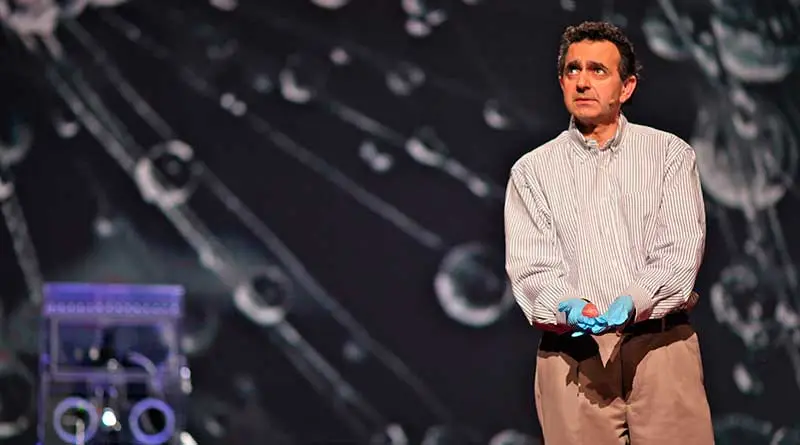
The main goal was to create a structure that could serve as a platform for the development of real tissues and organs in the future.
Since then, 3D printing technology has advanced considerably, and a variety of tissues—including bones, skin, cartilage, and more complex organs—have been 3D-printed, although large-scale 3D printing of fully functional organs for transplantation has not yet been achieved.
What are the benefits of 3D printing of organs?
3D printing of human organs has several potential benefits.
Reducing wait times for transplants:
First, it could solve the shortage of organs for transplants. Currently, the waiting list for organ transplants is long, and many people die before receiving the organ they need. 3D printing of organs could eliminate this shortage by creating organs identical to the originals.
Reducing transplant rejection:
Second, 3D printing of organs could reduce the risk of organ rejection by the recipient's body. Currently, donated organs are often rejected by the recipient's body, which can lead to serious complications and even death. 3D-printed organs are made of biocompatible materials that are less likely to be rejected by the body.
Greater accuracy and customization:
Finally, 3D printing of organs could also improve the precision and quality of organ transplants. 3D printing makes it possible to create organs that are exact replicas of the originals, meaning that the transplanted organ will be an almost perfect replica of the original. This could significantly improve transplant outcomes and the recipient’s recovery.
What Are the Challenges of 3D Organ Printing?
Despite the potential benefits, 3D organ printing presents some technical and ethical challenges that must be addressed to ensure its long-term success. Some of these challenges include:
- The need to develop more advanced and precise technology to ensure the creation of functional, personalized organs.
- The need to establish clear regulations governing the use of stem cells and other biological materials in 3D organ printing.
- The need to address ethical and legal issues related to the creation and use of 3D-printed organs, such as intellectual property and liability in the event of complications or failures.
The technology is still under development, and more research is needed before it can be widely used. In addition, 3D organ printing is an expensive process that requires specialized equipment and highly trained personnel.
Another major challenge is the lack of regulations and standards for 3D-printed organs. Clear and consistent regulations are essential to ensure the safety and efficacy of 3D-printed organs.
How 3D Organ Printing Is Impacting Medicine
3D organ printing is having a significant impact on medicine. The technology is being used to create organs for transplants, as well as for medical research and the development of new treatments.
Currently, 3D-printed organs are being used in essays clinical trials to evaluate their efficacy and safety in transplantation.
If the trials are successful, 3D printing of organs could become a common form of organ transplantation in the future.
In addition, 3D printing of organs is also being used for medical research. 3D-printed organs can be used to study diseases and test new treatments, which could accelerate the development of new drugs and therapies.
Conclusion: The Future of Transplants
The shortage of organs for transplantation is a global problem. According to the World Health Organization (WHO), More than 140,000 organ transplants are performed each year worldwide, but demand continues to far exceed supply. 3D printing of organs could be the solution to this problem.
3D printing of organs could help address the shortage of organs available for transplantation.
Instead of waiting for a suitable donor to be found, doctors could simply print an organ compatible with the patient using the patient's own cells.
This also reduces the risk of rejection by the body, since 3D-printed organs can be made from the patient's own cells.
In addition, 3D-printed organs could also be more efficient and cost-effective than donor organs.
With 3D organ printing, doctors can print custom-made organs and avoid wasting organs that go unused due to incompatibility.
This could also reduce the costs of organ transplants and make them more accessible to those who need them.
3D printing of organs could also have a significant impact on patients' life expectancy. Patients who need organ transplants often have to wait months or even years to find a suitable donor, and many die while they wait.
With 3D-printed organs, patients could receive the organs they need much more quickly, which could save lives and improve patients' quality of life.
Frequently Asked Questions
What types of organs can be 3D-printed?
Any human organ can be 3D-printed, from the heart to the kidneys and the liver.
Are 3D-printed organs safe for use in transplants?
Clinical trials are evaluating the safety and efficacy of 3D-printed organs for transplantation. More research is still needed before they can be used on a widespread basis.
Will 3D printing of organs eliminate the need for organ donation?
Although 3D organ printing has the potential to significantly improve the availability and quality of organs for transplantation, organ donation will still be necessary for many patients. 3D organ printing could be used in combination with organ donation to increase the number of available organs and improve the accuracy and quality of transplants.
What are the ethical implications of 3D printing organs?
3D organ printing raises several ethical issues, including ownership of 3D-printed organs, equitable access to the technology, and responsibility for the safety and efficacy of 3D-printed organs.
What is the future of 3D organ printing?
As technology continues to advance and more research is conducted, 3D printing of organs could become a common form of organ transplantation in the future. 3D printing of organs is also expected to have a significant impact on medical research and the development of new treatments for chronic diseases.
Related publications:




Responses