

Surface Finishes: How to Eliminate Layer Lines for an Injection-Molded Look

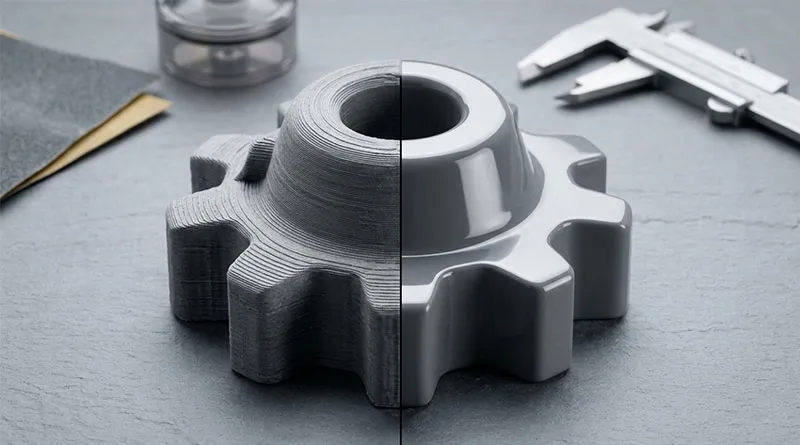
In today's industry, the ability to transform a rough piece into a high-end component is what separates hobbyists from true professionals. Mastering the 3D printing surface finishes It is essential for any manufacturer seeking to achieve an injection-molded appearance, completely eliminating that visual “stepped” effect so common in FDM technology.
By 2026, the market's aesthetic demands have grown, and it is no longer enough for a part to be functional; it must have a smooth, uniform surface that is ready for its intended use in commercial or engineering settings.
Chemical Post-Treatment: The Secret Behind Steam Straightening
For those looking for quick and consistent results, the 3D printing post-processing Solvent-based etching is the most advanced technique. This process is not based on physical abrasion, but rather on a controlled chemical reaction that causes the outer layer of the polymer to become temporarily fluid.
As the material self-levels due to surface tension, it seals the gaps between the layers, creating that injection-molded look we’re after.
Industrial Steam Smoothing (Vapor Smoothing)
This technique is the crown jewel for engineering materials such as nylon (PA12) or TPU. Unlike traditional methods, the steam-softened Industrial-grade treatment is performed in vacuum chambers that ensure the chemical agent reaches every corner of the part, even within complex internal geometries. The result is a sealed, leak-proof surface with a notable improvement in mechanical fatigue properties, achieved by eliminating stress concentration points between layers.
Acetone Vapor for ABS and ASA
Acetone treatment remains the gold standard for styrene-based filaments. By exposing the part to a vapor-saturated atmosphere, a surface fusion is achieved that produces a glossy, “mirror-like” finish. It is vital to control exposure times; excessive vapor can round off critical edges and compromise the dimensional tolerances of the original design.
Mechanical Methods: Sanding, Shot Blasting, and Leveling

When working with materials that do not react to common solvents, such as PLA or PETG, we must rely on physical abrasion and the addition of leveling layers to smooth layer lines effectively.
Progressive Sanding and the Use of Primer Filler
The path to a flawless finish begins with wet and dry sanding, but the real professional secret lies in the application of a first filler (high-fill primer).
- Leveling phase: After an initial sanding with 200-grit sandpaper, a generous coat of technical primer is applied to physically fill in the grooves.
- Refined: Once dry, the first layer of filler is sanded with fine-grit sandpaper (600 to 1000), leaving a completely flat, matte surface ready for automotive paint or special coatings.
Sandblasting and Industrial Matte Finishing
Shot blasting, or bead blasting It uses microspheres (made of glass or ceramic) propelled at high pressure. This technique is ideal for functional parts that require a professional, tactile matte finish. It is particularly effective at hiding layer lines on parts printed using SLS or Multi Jet Fusion technology, giving them a uniform texture that conceals any traces of the additive manufacturing process.
Automotive-Grade Coatings and Finishes

Once we have achieved a level base using the 3D printing surface finishes, the next step is to apply coatings that not only improve the appearance but also provide durability. In 2026, the trend is toward using chemicals derived from the automotive industry that can withstand UV rays, oils, and constant friction—a critical requirement for parts that will be handled or installed outdoors.
Two-coat paint and high-resistance varnishes
To achieve an authentic painted look, the paint must be applied in a controlled environment. Using two-coat systems (color + clear coat) allows you to experiment with matte, satin, or glossy finishes.
- 2K Varnish (Polyurethane): This is the standard for professional-grade parts. Unlike ordinary sprays, two-component clear coat creates an extremely hard chemical layer that protects the integrity of the 3D printing post-processing against scratches and chemicals.
- Special effects: Thanks to these coatings, we can give a plastic part a metallic, pearlescent, or even soft-touch finish that completely tricks the sense of touch.
Low-viscosity epoxy resins
When a part has a shape that makes manual sanding difficult, self-leveling epoxy resins are the solution. When applied, the resin flows into the valleys between the layer lines due to gravity and surface tension, creating a uniform “skin.” It is an excellent technique for smooth layer lines in large decorative pieces or molds that need to be completely watertight.
Advanced finishes for metal and technical materials

If the article is about excellence, we can't overlook the high-end materials you work with. Printed metals and high-performance polymers require a finish that goes beyond paint.
- Anodized: For 3D-printed aluminum parts, this chemical process creates a controlled oxide layer that can be dyed vibrant colors, increasing surface hardness.
- Electroplating (Galvanoplasty): Engineering plastics can be coated with actual layers of copper, nickel, or chromium. This not only gives them a genuine metallic appearance but also provides electrical conductivity and significantly greater resistance to mechanical wear.
When should you outsource post-processing to a professional service?

Achieving an industrial-grade finish in your own workshop is possible, but it requires a costly learning curve and the handling of chemicals that demand strict safety measures. Outsourcing the 3D printing surface finishes Choosing a professional service isn't just a matter of aesthetics, but also of technical and commercial feasibility for your projects in 2026.
Consistency in Small-Batch Production
If you need 50 or 100 pieces to have exactly the same texture and sheen, manual labor is your biggest enemy. The human factor introduces inevitable variations. A service like Justway.com It uses automated shot blasting and steam smoothing systems that ensure the first part is identical to the last, which is vital for products that go directly to market.
Access to sealing and certification technologies
There are applications where the 3D printing post-processing It must comply with regulations. If your design needs to be vacuum-tight, resistant to hydraulic pressure, or biocompatible for medical use, DIY methods offer no guarantees. Professional services provide quality reports and certified processes that ensure the chemical treatment has sealed every microporous opening in the material without weakening its internal structure.
Justway.com: Your industrial finishing facility is just a click away

As we have discussed, the complexity of smooth layer lines in technical materials such as PEEK or aluminum is extremely high. Justway.com It eliminates this complication by offering a comprehensive solution:
- “Plug-and-Play” finishes: You can order your parts with shot blasting, chemical polishing, anodizing, or professional painting directly through their platform.
- Time savings: What would take you days to sand and dry by hand, Justway handles simultaneously during the manufacturing process, optimizing your supply chain.
- Quality Control: Each part undergoes an inspection to ensure that the surface finish has not affected the critical tolerances of your design.
Conclusion: The Importance of Aesthetics
In short, the 3D printing surface finishes They are no longer just a decorative “extra” but have become an engineering requirement. In 2026, the value of a part is measured by its ability to perform and look like a finished product. Whether through meticulous hand-sanding or by leveraging the power of services like Justway, the goal remains the same: for the manufacturing technology to be invisible and for the design to take center stage.
Join our community
What is your favorite method for smoothing parts in impresion3d.net/? Are you someone who enjoys the manual process, or do you prefer the precision of an industrial finish?
Share your experiences in the comments and tell us which material has given you the best results after post-processing.

[…] Special Finishes […]